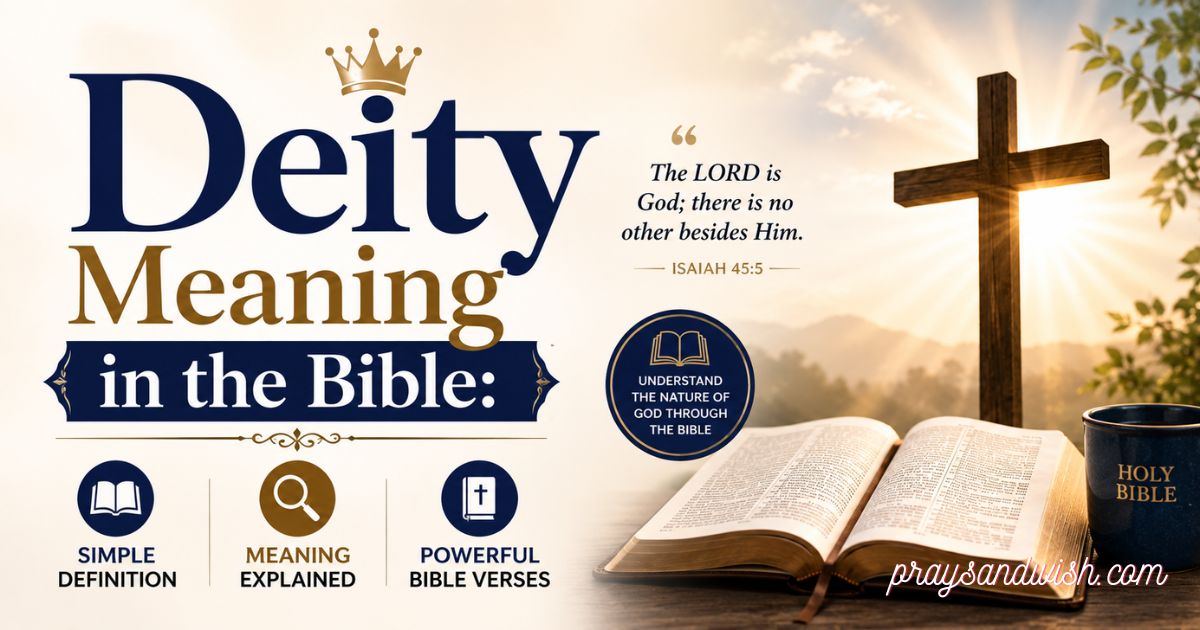
What Is Deity in the Bible? Meaning, Definition & Verses
Have you ever come across the word deity while reading the Bible and wondered what it really means? This is not just an ordinary word; it helps us understand the greatness, holiness, and eternal nature of God. Understanding the meaning of deity in the Bible shows us who God is, how powerful He is, and how He relates to His creation.
The Bible teaches that God is the one true Creator with complete authority over everything. It also explains the divine nature of Jesus Christ and the Holy Spirit. In this article, we will explore the simple meaning of deity, important Bible verses, Hebrew and Greek meanings, and why this topic is important for understanding Scripture.
Table of Contents
What Is the Meaning of Deity?
The word deity means the quality or nature of being divine. It describes a being that has the qualities of a god.
In general English, the word deity can refer to a god or a divine being worshiped by people. However, when we talk about the meaning of deity in the Bible, it has a deeper meaning.
Biblical deity refers to the unique nature of the one true God.
God’s deity includes:
- Eternal existence
- Perfect holiness
- Unlimited power
- Complete wisdom
- Supreme authority
God is not a created being. He is the Creator of all things.
What Does Deity Mean in the Bible?
The meaning of deity in the Bible refers to God’s divine nature and His position as the supreme ruler of creation.
The Bible explains that God is different from everything He created. Humans, angels, and all living things have a beginning, but God has always existed.
The Bible describes God as:
- The Creator of the universe
- The source of all life
- The ruler over all creation
- The only One worthy of worship
Genesis 1:1 says:
“In the beginning God created the heavens and the earth.”
This verse shows that God existed before creation and that everything came from His power.
Biblical Definition of Deity With Key Bible Verses
To understand the biblical definition of deity, we need to look at what Scripture teaches about God’s nature.
The Bible shows that God is:
- All-powerful
- All-knowing
- Eternal
- Perfectly holy
- Full of love and justice
Below are some important Bible verses that explain deity.
Genesis 1:1 — God as the Creator of All Things
Genesis 1:1 says:
“In the beginning God created the heavens and the earth.”
This verse introduces God as the Creator. Before anything existed, God already existed.
Creation shows God’s:
- Power
- Wisdom
- Authority
Because God created everything, He has complete control over His creation.
Isaiah 45:5 — The One True God
Isaiah 45:5 says:
“I am the Lord, and there is no other; apart from me there is no God.”
This verse teaches that the Bible recognizes only one true God.
God is not one of many equal gods. He is the supreme Creator who deserves all worship and honor.
Colossians 2:9 — The Fullness of Deity in Christ
Colossians 2:9 says:
“For in Christ all the fullness of the Deity lives in bodily form.”
This verse is one of the strongest Bible verses about the deity of Jesus Christ.
It teaches that Jesus does not only show God’s qualities; He has the fullness of God’s nature.
Deity Meaning in Hebrew and Greek
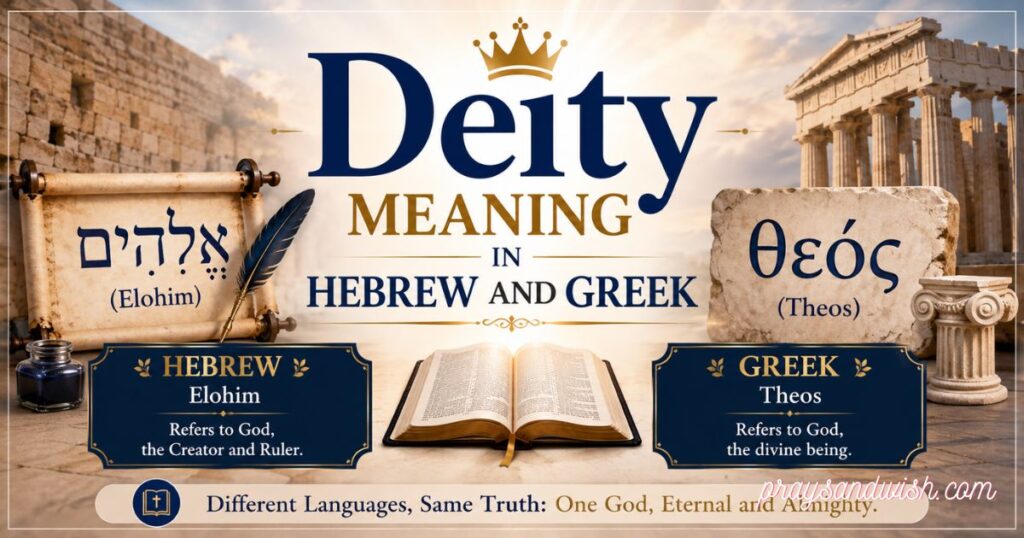
To fully understand the meaning of deity in the Bible, it is helpful to study the original languages of Scripture. The Bible was mainly written in Hebrew (Old Testament) and Greek (New Testament).
These languages use different words to describe God’s identity, power, and divine nature.
Learning these words helps us understand how the Bible describes God.
Many biblical words have deep meanings in their original languages. Learning about Nora Meanings can also help readers understand the importance and background of different biblical terms.
Hebrew Words Related to Deity
The Old Testament uses several Hebrew words to describe God. These words show His power, authority, and relationship with His people.
Elohim (אֱלֹהִים)
Elohim is one of the first names used for God in the Bible.
Genesis 1:1 says:
“In the beginning God created the heavens and the earth.”
The Hebrew word translated as “God” in this verse is Elohim.
Elohim shows that God is:
- The Creator of everything
- Powerful above all things
- The Supreme Judge
- Worthy of worship
Although Elohim has a plural form, the Bible often uses it to refer to the one true God.
El (אֵל)
The Hebrew word El means “God” or “Mighty One.”
It describes God’s strength and greatness.
This word is often combined with other words to explain different qualities of God.
Examples:
- El Shaddai — God Almighty
- El Elyon — God Most High
These names remind believers that God has unlimited power and authority.
Yahweh (יהוה)
Yahweh is the personal name of God revealed in the Old Testament.
This name is connected with the phrase:
“I AM WHO I AM.”
God revealed this name to Moses when He spoke through the burning bush.
Yahweh shows that God is:
- Eternal
- Self-existing
- Unchanging
- Always present
Unlike humans, God does not depend on anyone or anything for His existence.
Adonai (אֲדֹנָי)
The word Adonai means “Lord” or “Master.”
It shows that God has complete authority over everything.
When people called God Adonai, they recognized that:
- God owns all creation
- God rules with wisdom
- God deserves obedience
Greek Words Related to Deity
The New Testament was written in Greek, and it uses important words to explain God’s divine nature.
Theos (Θεός)
Theos is the Greek word for God.
In the New Testament, it is used for the one true God.
It is also used when explaining the divine nature of Jesus Christ.
John 1:1 says:
“The Word was God.”
This verse teaches that Jesus had a unique relationship with God and shared the divine nature.
Kyrios (Κύριος)
Kyrios means “Lord” or “Master.”
This word was used to show authority and ownership.
In the New Testament, the title Kyrios is often used for Jesus.
When Christians say:
“Jesus is Lord,”
they are recognizing His authority and His special position.
Does Deity Mean God? Understanding the Biblical Difference
Many people ask:
“Does deity mean God?”
The answer is yes, but there is a small difference.
The word deity describes the nature or quality of being divine, while God refers to the Supreme Being.
A simple way to understand it:
| Deity | God |
|---|
| Means divine nature | Refers to the Supreme Creator |
| Describes what God is | Refers to who God is |
| Connected with godhood | The one true God of the Bible |
In the Bible, when we talk about the deity of God, we are talking about His eternal and perfect nature.
God is not simply a powerful being. He is the Creator who has no beginning and no end.
How to Pronounce Deity in the Bible
The word deity is pronounced:
DEE-uh-tee
It has three parts:
- Dee
- Uh
- Tee
Knowing the pronunciation can help readers understand Bible studies, sermons, and theological discussions.
Deity Meaning in the Bible KJV Version
Many people search for “deity meaning in the Bible KJV” because the King James Version often uses the word Godhead instead of deity.
The word Godhead means God’s divine nature or fullness.
Acts 17:29 — Godhead Is Greater Than Idols
Acts 17:29 says:
“Forasmuch then as we are the offspring of God, we ought not to think that the Godhead is like unto gold, or silver, or stone.”
This verse teaches that God cannot be compared to human-made objects.
God is living, powerful, and greater than anything people create.
Romans 1:20 — God’s Divine Nature Seen in Creation
Romans 1:20 teaches that God’s invisible qualities can be understood through creation.
The universe shows:
- God’s power
- God’s wisdom
- God’s greatness
Creation points people toward the Creator.
Colossians 2:9 — Fullness of Godhead in Christ
Colossians 2:9 says:
“For in him dwelleth all the fulness of the Godhead bodily.”
This verse explains the Christian belief that Jesus Christ fully shares God’s divine nature.
The Deity of God the Father According to Scripture
The Bible teaches that God the Father is the eternal Creator and the source of all things. From Genesis to Revelation, Scripture shows that God has complete power, perfect wisdom, and absolute authority.
God the Father is not one god among many. The Bible teaches that He is the one true God who created and controls everything.
God the Father as the Creator
The first verse of the Bible introduces God as the Creator.
Genesis 1:1 says:
“In the beginning God created the heavens and the earth.”
This verse shows that God existed before anything else.
Everything in creation depends on God:
- The universe
- The earth
- Human life
- All living creatures
Because God created everything, He has complete authority over His creation.
God’s Holiness and Power
One of the most important parts of God’s divine nature is His holiness.
Holiness means that God is completely pure, perfect, and separate from sin.
Isaiah 6:3 says:
“Holy, holy, holy is the Lord Almighty; the whole earth is full of his glory.”
This verse shows that God’s holiness is greater than anything in creation.
The Bible also describes God’s power through His attributes:
- He is all-powerful
- He is all-knowing
- He is eternal
- He is loving
- He is perfectly just
These qualities reveal the greatness of God’s deity.
The Deity of Jesus Christ: Is Jesus a Deity?

One of the most important questions people ask is:
“Is Jesus a deity?”
According to Christian teaching and many Bible passages, Jesus Christ has the divine nature of God.
The Bible does not describe Jesus as only a teacher or prophet. It presents Him as the Son of God who shares God’s divine nature.
The deity of Christ means that Jesus is fully divine while also becoming fully human.
John 1:1 — Jesus as the Eternal Word
John 1:1 says:
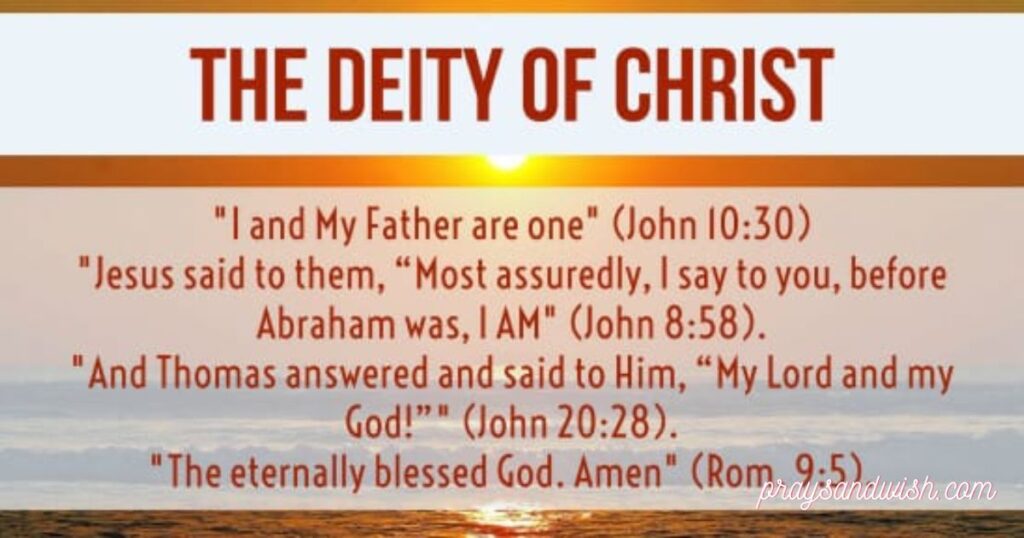
“In the beginning was the Word, and the Word was with God, and the Word was God.”
This verse teaches three important truths:
- Jesus existed before creation.
- Jesus was with God.
- Jesus shared the nature of God.
The “Word” in this verse refers to Jesus Christ.
John 1:14 explains that the Word became flesh and lived among people.
This shows the Christian belief that God came into the world through Jesus.
Colossians 2:9 — The Fullness of God in Christ
Colossians 2:9 says:
“For in Christ all the fullness of the Deity lives in bodily form.”
This verse is one of the clearest teachings about the deity of Jesus.
It explains that Jesus did not only show some qualities of God. He possessed the fullness of God’s nature.
Through Jesus, people see:
- God’s love
- God’s mercy
- God’s authority
- God’s power
Hebrews 1:3 — Jesus Is the Exact Image of God
Hebrews 1:3 says:
“The Son is the radiance of God’s glory and the exact representation of his being.”
This verse teaches that Jesus perfectly reveals God’s character.
Jesus showed people what God is like through His:
- Words
- Actions
- Love
- Compassion
The Deity of the Holy Spirit in the Bible
The Bible teaches that the Holy Spirit is not just a force or an invisible power.
The Holy Spirit is presented as a divine person who shares God’s nature.
The Holy Spirit has:
- Knowledge
- Will
- Power
- The ability to teach and guide
These qualities show that the Holy Spirit is more than a simple energy or force.
The Holy Spirit Is Called God
Acts 5:3-4 tells the story of Ananias and Peter.
Peter explains that lying to the Holy Spirit is lying to God.
This shows that the Holy Spirit has a divine identity.
The Holy Spirit Has God’s Attributes
The Bible describes the Holy Spirit with qualities that belong to God.
The Holy Spirit is:
- Eternal
- Present everywhere
- Full of wisdom
These qualities show His divine nature.
The Holy Spirit Works With the Father and Son
Matthew 28:19 says:
“Baptizing them in the name of the Father and of the Son and of the Holy Spirit.”
This verse places the Father, Son, and Holy Spirit together.
It shows their important relationship in Christian belief.
Bible Verses About Deity Everyone Should Know
The Bible contains many verses that explain the deity of God, the divine nature of Jesus Christ, and the work of the Holy Spirit.
These verses help us understand who God is and why He is worthy of worship.
Studying each Bible Verse helps readers understand God’s nature, power, and message more clearly.
John 1:1 — The Word Was God
John 1:1 says:
“In the beginning was the Word, and the Word was with God, and the Word was God.”
This verse teaches that Jesus existed before creation.
It shows that Jesus was not only a human teacher but also shared the divine nature of God.
Colossians 2:9 — The Fullness of Deity
Colossians 2:9 says:
“For in Christ all the fullness of the Deity lives in bodily form.”
This verse explains that Jesus fully reveals God’s nature.
It teaches that Jesus is not partly divine. Christians believe that He has the complete fullness of deity.
Titus 2:13 — Jesus as God and Savior
Titus 2:13 says:
“While we wait for the blessed hope—the appearing of the glory of our great God and Savior, Jesus Christ.”
This verse connects Jesus with divine glory and salvation.
It shows the importance of Jesus in Christian faith.
Hebrews 1:8 — The Son Is Called God
Hebrews 1:8 says:
“But about the Son he says, ‘Your throne, O God, will last forever and ever.’”
This verse shows the greatness and authority of Jesus Christ.
It presents the Son as having an eternal kingdom.
Isaiah 9:6 — The Promised Messiah
Isaiah 9:6 says:
“And he will be called Wonderful Counselor, Mighty God, Everlasting Father, Prince of Peace.”
This Old Testament prophecy points toward the coming Messiah.
It describes the Messiah with names that show power and greatness.
John 8:58 — Jesus and Eternal Existence
John 8:58 says:
“Before Abraham was born, I am.”
Jesus used words that connect with God’s name revealed in the Old Testament.
This statement shows His eternal existence.
Acts 5:3-4 — The Holy Spirit Is God
Acts 5:3-4 teaches that lying to the Holy Spirit is lying to God.
This passage shows that the Holy Spirit has a divine identity.
Deuteronomy 6:4 — The One True God
Deuteronomy 6:4 says:
“Hear, O Israel: The Lord our God, the Lord is one.”
This verse is one of the most important statements about God’s oneness.
It teaches that there is one true God.
God’s Divine Nature and Attributes Explained
The divine nature of God describes the qualities that make Him different from everything else.
These qualities are called the attributes of God.
They help us understand His greatness, power, and character.
Holiness of God
God’s holiness means He is completely pure and perfect.
He is free from all sin and wrongdoing.
Isaiah 6:3 says:
“Holy, holy, holy is the Lord Almighty.”
God’s holiness shows that He is completely different from creation.
Omnipotence (All-Powerful)
Omnipotence means having unlimited power.
The Bible teaches that God has the ability to do everything according to His perfect will.
God showed His power by:
- Creating the universe
- Controlling nature
- Performing miracles
- Giving life
Jeremiah 32:17 says:
“Nothing is too hard for you.”
Omniscience (All-Knowing)
Omniscience means knowing everything.
God knows:
- The past
- The present
- The future
- The thoughts of people
Psalm 147:5 says:
“His understanding has no limit.”
God’s knowledge is perfect and complete.
Eternal Nature of God
God has no beginning and no end.
Humans live within time, but God exists beyond time.
Revelation 22:13 says:
“I am the Alpha and the Omega, the First and the Last, the Beginning and the End.”
This verse shows God’s eternal existence.
Spiritual Meaning of Deity in Christian Life
Understanding deity is not only about learning a definition. It also affects how people view God and practice their faith.
Knowing God’s divine nature helps believers develop a deeper relationship with Him.
Understanding God’s divine nature helps believers build a stronger relationship with Him through worship, faith, and Biblical Prayers.
It Inspires True Worship
When people understand God’s greatness, they respond with respect and worship.
God is not just powerful; He is also loving, merciful, and caring.
Understanding His deity helps people honor Him with their lives.
It Gives Confidence in Salvation
Christians believe that the deity of Jesus Christ is important for salvation.
They believe Jesus has the power and authority to save because of His divine nature.
It Strengthens Faith and Prayer
Understanding that God is powerful and loving gives believers confidence when they pray.
They trust that God hears them and has the ability to help them.
Common Misunderstandings About Deity in Christianity
The topic of deity in Christianity can sometimes be confusing. Many people have questions about God, Jesus Christ, the Holy Spirit, and the meaning of divine nature.
Understanding the Bible’s teaching helps clear up these common misunderstandings.
Does the Trinity Mean Christians Worship Three Gods?
One common misunderstanding is that Christians believe in three separate gods.
However, the Christian teaching of the Trinity explains that there is:
- One God
- Three distinct persons:
- The Father
- The Son (Jesus Christ)
- The Holy Spirit
The Bible teaches that these three persons share the same divine nature.
Deuteronomy 6:4 says:
“Hear, O Israel: The Lord our God, the Lord is one.”
This verse shows that biblical Christianity teaches belief in one true God.
Did Jesus Become God Later?
Some people think Jesus became divine after His birth, baptism, or resurrection.
However, the Bible teaches that Jesus existed before His life on earth.
John 1:1 says:
“In the beginning was the Word, and the Word was with God, and the Word was God.”
This verse teaches that Jesus had a divine nature from the beginning.
Is the Holy Spirit Only a Force?
Another misunderstanding is that the Holy Spirit is only a power or energy.
The Bible describes the Holy Spirit as a personal being who:
- Speaks
- Teaches
- Guides
- Gives wisdom
- Can be grieved
These actions show that the Holy Spirit is not just a force but has a personal identity.
Deity Synonyms and Similar Biblical Terms
The word deity has several related words that can help explain its meaning.
God
The word God refers to the Supreme Creator.
In the Bible, God is the eternal One who created everything and rules over all creation.
Divine
The word divine means something connected with God or belonging to God.
For example:
- God’s divine power
- God’s divine wisdom
- God’s divine nature
Godhead
The word Godhead is commonly found in older Bible translations such as the King James Version (KJV).
It refers to the fullness of God’s nature.
Colossians 2:9 says:
“For in him dwelleth all the fulness of the Godhead bodily.”
This verse is often used to explain the divine nature of Christ.
Lord
The word Lord shows authority and ownership.
When the Bible calls God “Lord,” it recognizes Him as the ruler and master of all things.
Almighty
The word Almighty means having complete and unlimited power.
It describes God’s ability and authority over all creation.
Deity vs Divine: What Is the Difference?
Many people confuse the words deity and divine because they have similar meanings.
However, they are used in slightly different ways.
| Deity | Divine |
|---|
| Refers to the state of being God | Refers to something connected with God |
| Describes God’s nature | Describes God’s qualities |
| Means godhood or divine essence | Means holy or heavenly |
A simple example:
- God has deity because He is God.
- God’s love, wisdom, and power are divine qualities.
conculsion
Understanding the meaning of deity in the Bible helps us learn more about the true nature of God. The Bible shows that God is eternal, holy, powerful, and the Creator of all things. It also teaches about the divine nature of Jesus Christ and the Holy Spirit. Deity is not just a word; it explains the greatness, authority, and glory of God.
By studying Bible verses and the original Hebrew and Greek meanings, we can better understand who God is and His relationship with humanity. Learning about deity helps strengthen faith, improve our understanding of Scripture, and reminds us why God deserves worship and respect.
Frequently Asked Questions About Deity Meaning
What does deity mean in the Bible?
Deity in the Bible means the divine nature of God. It describes His power, holiness, eternal existence, and authority.
Does deity mean God?
Yes, deity is related to God. It refers to the nature or quality of being divine.
Is Jesus a deity?
According to Christian belief, Jesus Christ has a divine nature. Bible verses like John 1:1 and Colossians 2:9 explain His deity.
What is the Hebrew meaning of deity?
The Bible uses Hebrew words like Elohim, Yahweh, El, and Adonai to describe God’s identity, power, and authority.
What is the Greek meaning of deity?
In Greek, words like Theos and Kyrios are used in the Bible to describe God and His divine nature.