Ayatul Kursi Meaning, Benefits & Powerful Lessons of Quran Verse
Ayatul Kursi is one of the most powerful and beloved verses in the Quran. It teaches Muslims about Allah’s greatness, unlimited knowledge, and complete power over all creation. Many Muslims around the world recite Ayatul Kursi to find peace, strengthen their faith, and remember Allah in their daily lives.
The deep message behind Ayatul Kursi helps believers understand Allah’s protection, mercy, and wisdom. In this guide, you will learn the Ayatul Kursi meaning, Ayatul Kursi translation, its benefits, importance, and why this beautiful Quran verse holds a special place in Islam.
Table of Contents
What Is Ayatul Kursi and Why Is Ayatul Kursi Important?
Ayatul Kursi is the 255th verse of Surah Al-Baqarah, the second chapter of the Quran. The word “Ayat” means a sign or verse, while “Kursi” refers to Allah’s authority, knowledge, and greatness.
This verse describes some of the most important attributes of Allah. It explains that Allah is always living, never becomes tired or unaware, and His knowledge covers everything in the heavens and the earth.
Ayatul Kursi is considered a special verse because it focuses on the foundation of Islamic belief: the greatness and uniqueness of Allah.
The verse teaches believers:
- Allah is the only true Creator and Sustainer.
- Allah’s knowledge includes everything visible and hidden.
- Nothing happens without Allah’s permission.
- Human knowledge is limited compared to Allah’s wisdom.
- Believers should depend on Allah in every situation.
Many Muslims recite Ayatul Kursi not only for rewards but also to reflect on its deep message. It helps develop faith, patience, and trust in Allah.
Also Read More: Duas for Qunoot
Where Is Ayatul Kursi Found in the Quran?
Ayatul Kursi is found in Surah Al-Baqarah (2:255). It is one verse within a longer chapter of the Quran and is not a separate Surah.
Surah Al-Baqarah is the longest chapter of the Quran and contains many teachings related to faith, worship, morality, and guidance for human life.
Quick Facts About Ayatul Kursi
| Topic | Information |
| Name | Ayatul Kursi |
| Location | Surah Al-Baqarah |
| Verse Number | 255 |
| Chapter Number | 2 |
| Language | Arabic |
| Main Theme | Allah’s greatness and authority |
The verse is famous because it mentions several important names and qualities of Allah, making it a powerful reminder of His existence and power.
Ayatul Kursi Arabic Text With English Translation
Ayatul Kursi Arabic Text
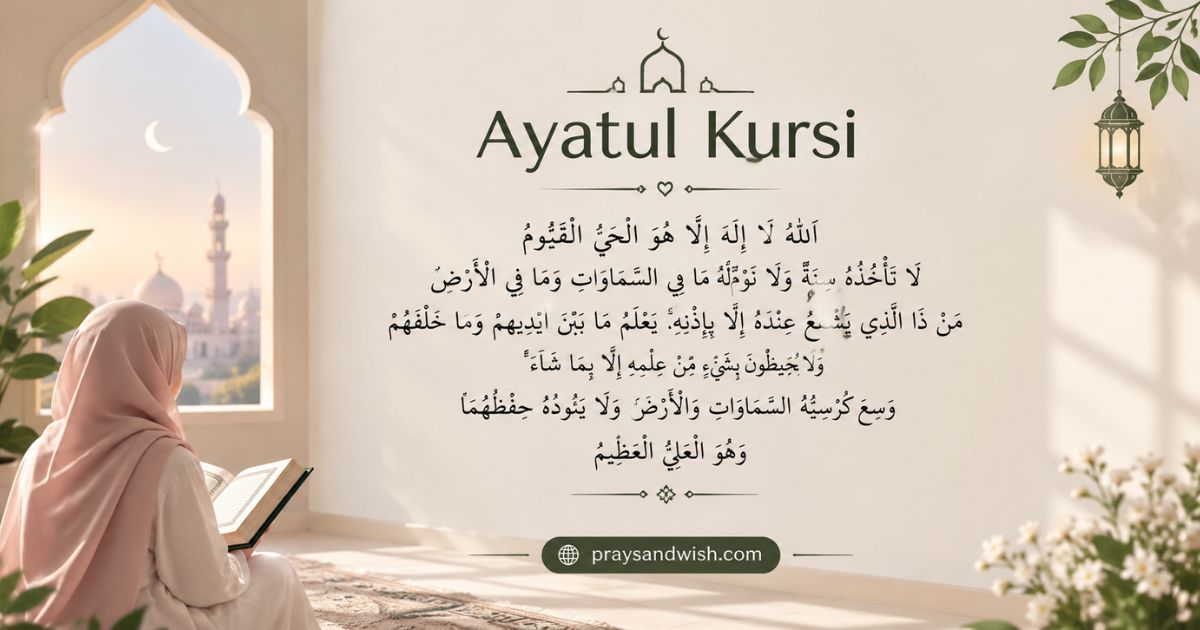
اللَّهُ لَا إِلَٰهَ إِلَّا هُوَ الْحَيُّ الْقَيُّومُ ۚ لَا تَأْخُذُهُ سِنَةٌ وَلَا نَوْمٌ ۚ لَّهُ مَا فِي السَّمَاوَاتِ وَمَا فِي الْأَرْضِ ۗ مَنْ ذَا الَّذِي يَشْفَعُ عِندَهُ إِلَّا بِإِذْنِهِ ۚ يَعْلَمُ مَا بَيْنَ أَيْدِيهِمْ وَمَا خَلْفَهُمْ ۖ وَلَا يُحِيطُونَ بِشَيْءٍ مِّنْ عِلْمِهِ إِلَّا بِمَا شَاءَ ۚ وَسِعَ كُرْسِيُّهُ السَّمَاوَاتِ وَالْأَرْضَ ۖ وَلَا يَئُودُهُ حِفْظُهُمَا ۚ وَهُوَ الْعَلِيُّ الْعَظِيمُ
Ayatul Kursi English Translation
Allah—there is no deity except Him, the Ever-Living, the Sustainer of all existence. Neither drowsiness nor sleep overtakes Him. To Him belongs whatever is in the heavens and whatever is on the earth. Who can intercede with Him except by His permission? He knows what is before them and what will be after them, and they cannot grasp anything of His knowledge except what He wills. His Kursi extends over the heavens and the earth, and preserving them does not tire Him. And He is the Most High, the Most Great.
The Ayatul Kursi English translation shows the central message of this verse: Allah’s unlimited power, knowledge, and control over creation.
Ayatul Kursi Meaning and Explanation
The Ayatul Kursi meaning goes beyond a simple translation. Each part of this verse teaches believers about Allah’s perfect qualities.
Allah Is Ever-Living and Sustains Everything
The verse begins by describing Allah as Al-Hayy (The Ever-Living) and Al-Qayyum (The Sustainer).
This teaches that Allah’s existence is permanent and independent, while everything else depends on Him.
Allah Has Complete Knowledge
Ayatul Kursi explains that Allah knows everything:
- The past
- The present
- The future
- Things humans can see
- Things humans cannot see
Human knowledge is limited, but Allah’s knowledge has no boundaries.
Allah Owns Everything in the Universe
The verse reminds believers that everything belongs to Allah. The heavens, earth, and everything within them exist under His authority.
This encourages humility and gratitude because humans are part of Allah’s creation.
Allah’s Protection Requires No Effort
The verse explains that protecting the heavens and earth does not make Allah tired or weak. His power is perfect and unlimited.
This gives believers confidence that Allah’s care is greater than any difficulty they face.
Ayatul Kursi in English, Hindi and Other Languages
The Quran was revealed in Arabic, but translations help people understand its message. Many Muslims around the world read Ayatul Kursi in English, Hindi, and other languages to understand its meaning better.
For Muslims living in the USA, English translation is especially helpful because it allows younger generations and new learners to connect with the message of the Quran.
Understanding the meaning while reciting Ayatul Kursi can make the experience more meaningful because believers are not only reading words but also reflecting on their message.
Common translations include:
| Language | Purpose |
| English | Helps global readers understand the meaning |
| Hindi | Helps Hindi-speaking communities understand |
| Arabic | Original Quranic revelation |
A translation does not replace the original Arabic text, but it helps readers understand the guidance and lessons contained in the verse.
Also Read More: Istikhara Dua
7 Powerful Benefits and Lessons of Ayatul Kursi
The Ayatul Kursi benefits are connected with faith, reflection, and remembrance of Allah. This verse teaches important spiritual lessons that can influence a Muslim’s daily life.
Strengthens Faith in the Oneness of Allah
One of the greatest lessons of Ayatul Kursi is understanding Tawheed, the belief that Allah is One and has no partner.
The verse begins by declaring that there is no deity except Allah. This strengthens a believer’s relationship with Allah and reminds them where true reliance should be placed.
Reminds Believers About Allah’s Power and Knowledge
Ayatul Kursi teaches that Allah knows everything and controls all creation.
When people face uncertainty, this reminder can bring comfort because Allah’s knowledge is greater than human understanding.
Provides Spiritual Protection and Peace
Many Muslims recite Ayatul Kursi as a source of spiritual comfort. The verse reminds believers that Allah is always aware and capable of protecting His creation.
This understanding can bring peace during difficult moments.
Teaches Complete Reliance on Allah
Another important lesson of Ayatul Kursi is learning to place complete trust in Allah. Life includes challenges, uncertainties, and situations that humans cannot always control.
This verse reminds believers that Allah has complete authority over everything. When Muslims understand this message, they develop patience and confidence because they know Allah’s wisdom is greater than their own understanding.
Reliance on Allah does not mean avoiding effort. Instead, it means working hard while trusting Allah for the final outcome.
Helps Muslims Remember Allah in Daily Life
Modern life can become busy with work, studies, family responsibilities, and personal goals. Ayatul Kursi helps Muslims create moments of remembrance throughout the day.
Many believers include its recitation in their daily routine because it creates a connection with Allah and encourages mindfulness of faith.
Common times when Muslims recite Ayatul Kursi include:
- After obligatory prayers
- During morning and evening remembrance
- Before sleeping
- During personal reflection
- While teaching children Quranic verses
Regular recitation helps keep faith active in everyday life.
Builds a Stronger Connection With the Quran
The Quran is not only meant to be recited but also understood and reflected upon. Ayatul Kursi encourages Muslims to think deeply about Allah’s attributes and their relationship with Him.
Learning the meaning behind this verse can increase appreciation for the Quran and motivate believers to study other verses with greater understanding.
Brings Comfort and Tranquility to the Heart
One of the most beautiful lessons of Ayatul Kursi is the sense of peace it can bring. The verse reminds believers that Allah is always aware, powerful, and caring.
During moments of stress, fear, or uncertainty, remembering Allah can provide emotional strength and spiritual comfort.
The message of Ayatul Kursi encourages believers to remember:
Allah’s knowledge is greater than our worries, and His wisdom is greater than our understanding.
Ayatul Kursi Before Sleeping: Benefits and Authentic Practice
Ayatul Kursi before sleeping is a common practice among Muslims around the world. Many believers recite this verse before going to bed as part of their nightly remembrance of Allah.
According to Islamic teachings, reciting Ayatul Kursi before sleep is associated with seeking Allah’s protection and remembering Him before resting.
A simple bedtime routine may include:
- Performing ablution if possible.
- Reading Ayatul Kursi with understanding.
- Making personal supplications.
- Sleeping while remembering Allah.
The practice helps believers end their day with gratitude and faith.
Many Muslims find comfort in knowing that their final moments before sleep are spent remembering Allah rather than focusing only on worldly concerns.
Also Read More: Dua of Ramzan
Ayatul Kursi for Protection From Evil and Harm
The phrase Ayatul Kursi for protection is frequently searched by Muslims who want to understand the spiritual significance of this verse.
Ayatul Kursi reminds believers that Allah is the ultimate protector and that nothing happens outside His knowledge and permission.
The protection mentioned through Quranic remembrance is connected with:
- Strengthening faith
- Seeking Allah’s help
- Increasing spiritual awareness
- Developing trust in Allah
Muslims often recite Ayatul Kursi when seeking peace and protection during their daily lives.
However, it is important to understand that reciting Quran is not simply a ritual. The deeper purpose is to build a stronger relationship with Allah and follow His guidance.
How Many Times Should You Read Ayatul Kursi?
Many people ask about the correct number of times to read Ayatul Kursi. The answer depends on the purpose and personal practice.
There is no general requirement that every Muslim must recite Ayatul Kursi a specific number of times daily. Muslims may recite it as part of their worship, remembrance, and reflection.
Common practices include:
| Time | Purpose |
| After prayers | Remembering Allah after worship |
| Before sleeping | Ending the day with remembrance |
| Morning and evening | Daily spiritual routine |
| During personal reflection | Strengthening faith |
The importance is not only the number of repetitions but also sincerity, understanding, and connection with Allah.
Is Reading Ayatul Kursi 786 Times Authentic?
The practice of reading Ayatul Kursi 786 times is searched by many people online. Some communities follow this number as part of personal religious practices.
However, there is no widely accepted authentic evidence that specifically requires Muslims to recite Ayatul Kursi exactly 786 times.
Islam encourages Muslims to recite Quran, remember Allah, and make sincere prayers. The focus should remain on understanding the verse and developing a strong connection with Allah.
When practicing any form of worship, Muslims often seek guidance from reliable Islamic scholars and authentic sources.
Ayatul Kursi in Daily Muslim Life
Ayatul Kursi has become an important part of daily spiritual life for many Muslims. It serves as a reminder of Allah’s presence, power, and mercy.
Muslims may include Ayatul Kursi in different parts of their routine:
After Salah (Prayer)
Many Muslims recite Ayatul Kursi after obligatory prayers as an act of remembrance and reflection.
Teaching Children
Parents often teach Ayatul Kursi to children because it introduces them to important Islamic beliefs about Allah.
During Difficult Times
When facing challenges, many believers turn toward Quran recitation for comfort, patience, and spiritual strength.
Personal Reflection
Understanding the meaning of Ayatul Kursi allows Muslims to reflect on important questions about faith, purpose, and their relationship with Allah.
Also Read More: Islamic Blessings for Friends
How to Memorize Ayatul Kursi Easily
Memorizing Ayatul Kursi becomes easier when approached step by step. Since the verse contains meaningful sections, learners can divide it into smaller parts.
Here are some helpful methods:
1. Listen Regularly
Listen to experienced Quran reciters and repeat after them.
2. Divide the Verse Into Sections
Instead of memorizing the entire verse at once, learn a few lines each day.
3. Understand the Meaning
Knowing the Ayatul Kursi meaning makes memorization easier because you understand what you are reciting.
4. Practice Daily
Spend a few minutes every day reviewing what you have learned.
5. Recite During Prayers
Using the verse regularly helps strengthen memory.
A simple memorization plan:
| Day | Goal |
| Day 1-2 | First section |
| Day 3-4 | Middle section |
| Day 5-6 | Final section |
| Day 7 | Complete revision |
Consistency is more important than speed.
Ayatul Kursi Photo and Printable Version
Many Muslims search for an Ayatul Kursi photo or printable version to keep as a visual reminder.
Beautiful Quranic calligraphy can help people remember the verse and encourage regular recitation. However, the true value of Ayatul Kursi comes from reading, understanding, and applying its message.
When using an Ayatul Kursi image:
- Choose clear and accurate Arabic text.
- Verify the translation.
- Treat Quranic verses with respect.
- Focus on learning rather than decoration only.
A printable version can be useful for students, families, and those learning Quran.
Why Is Ayatul Kursi Called the Greatest Verse of the Quran?
Ayatul Kursi is often described as one of the greatest verses of the Quran because it contains a powerful description of Allah’s names and attributes.
The verse combines several important concepts:
- Allah’s oneness
- Allah’s eternal existence
- Allah’s complete knowledge
- Allah’s unlimited authority
- Allah’s protection over creation
Its message summarizes essential beliefs about Allah in a single verse, which is why many Muslims give it special importance.
Also Read More: Islamic Blessing Quotes
When Should Muslims Recite Ayatul Kursi?
There are several occasions when Muslims commonly recite Ayatul Kursi.
These include:
- After daily prayers
- Before sleeping
- During personal worship
- While teaching Quran
- During moments of reflection
The purpose is to remember Allah and strengthen faith through Quranic words.
Frequently Asked Questions
Why is Ayat al-Kursi so powerful?
It describes Allah’s greatness, knowledge, authority, and complete control.
Is Ayatul Kursi a surah or ayat?
Ayatul Kursi is a verse from Surah Al-Baqarah.
What is the full text of Ayat al-Kursi?
It is verse 255 from Surah Al-Baqarah containing Quranic guidance.
How do I read Ayatul Kursi?
Read Arabic text carefully with understanding and sincere devotion.
How can I memorize Ayatul Kursi?
Practice daily, divide sections, listen, and understand meanings.
What are the 7 benefits of reciting Ayatul Kursi?
Faith, peace, protection, remembrance, reliance, comfort, Quran connection.
Conclusion
Ayatul Kursi is a powerful verse that teaches Muslims about Allah’s greatness, knowledge, and authority. Its message reminds believers that Allah is always aware of everything and that true peace comes through faith and remembrance.
Understanding the Ayatul Kursi meaning, translation, and lessons allows Muslims to connect more deeply with the Quran. Whether recited after prayer, before sleeping, or during personal reflection, this verse continues to inspire millions of believers around the world.
For Muslims in the USA and everywhere else, Ayatul Kursi remains a timeless reminder of trust, hope, and the greatness of Allah.